
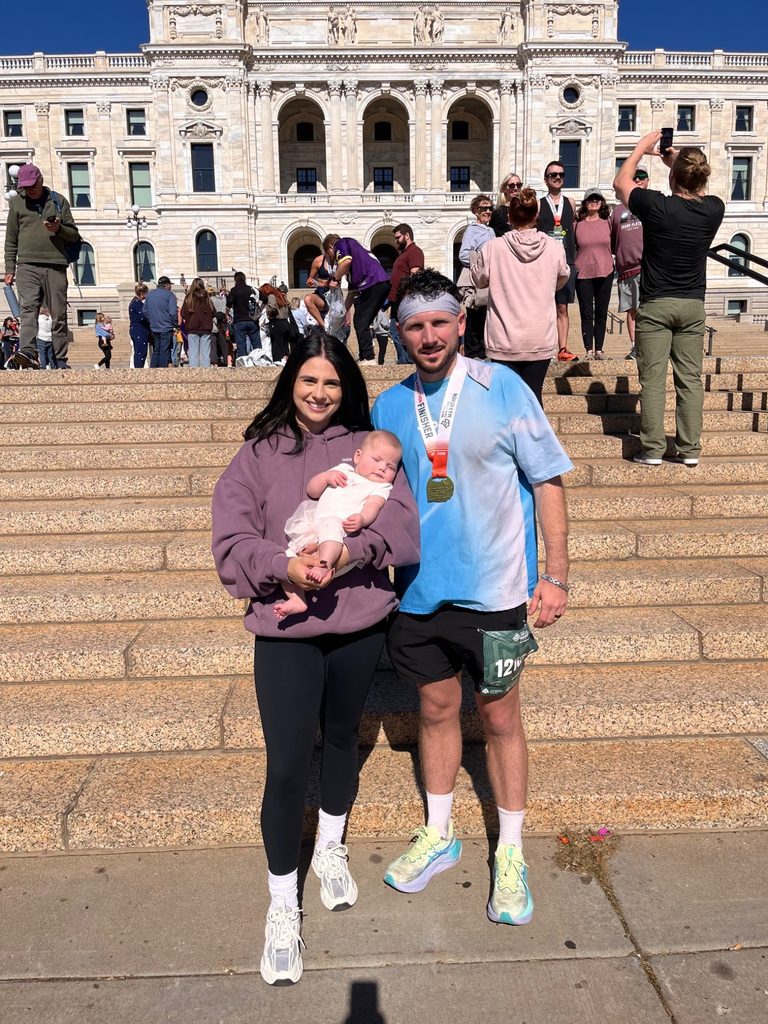
By Dr. Roetman | Evexia Clinic
How I trained for my first marathon in 10 weeks—and what I’d recommend to anyone preparing for their first 26.2 miles.
On October 4, 2026, I completed my first marathon after just 10 weeks of training, running 26.2 miles in under four hours.
Nine months earlier, I’d undergone major shoulder surgery. In June, we opened Evexia Clinic. In July, my daughter was born, and two weeks later, marathon training began.
A new business. A newborn. Recovering from surgery. And 26.2 miles ahead of me.
I had no business signing up for a marathon.
But I’ve always believed in pursuing physical challenges that are intimidating enough to scare me, yet realistic enough to pursue. I believe these goals help you learn important life lessons.
Marathon training taught me about human physiology, adaptation, and the relationship between physical fatigue and mental resilience and a few other things that go far beyond learning how to “run” which we will cover.
Sometimes your mind tells you to quit before you’ve reached your physical limits.
Here are the 10 biggest lessons from my first marathon. I did the trial and error so you don’t have to.
Lesson 1: Being Ready Is a Myth
One of the biggest mistakes people make is waiting until they feel ready.
Ready to run their first mile. Ready to sign up for a race.
It’s the familiar excuse: “When life gets less stressful, I’ll take my health seriously.”
Confidence doesn’t come before action. It comes from taking action.
That means accepting imperfect training days, setbacks, occasional aches, and unexpected life disruptions while adjusting when necessary.
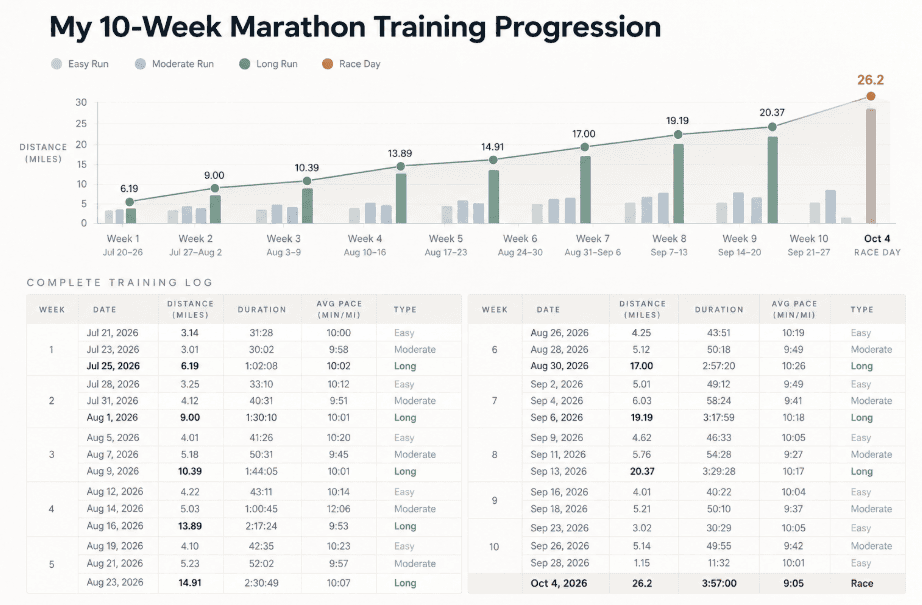
My first long run was just 6.19 miles. Ten weeks later, I completed a marathon.
But there’s an important distinction:
You don’t need to feel ready to start, but you do need enough time to prepare.
I had an athletic background and triathlon experience, yet 10 weeks was aggressive. Runners with an established base may benefit from a 16–20-week plan, while complete beginners may need six months to a year. And remember… I was coming off of a major shoulder surgery that limited me from rigorous exercise for 4 months.
Why does context like this matter? Because not every tissue adapts at the same rate.
Muscles can improve within weeks, while tendons and bones generally need longer to tolerate increasing loads. Feeling stronger doesn’t necessarily mean you’re prepared for a sudden mileage increase.
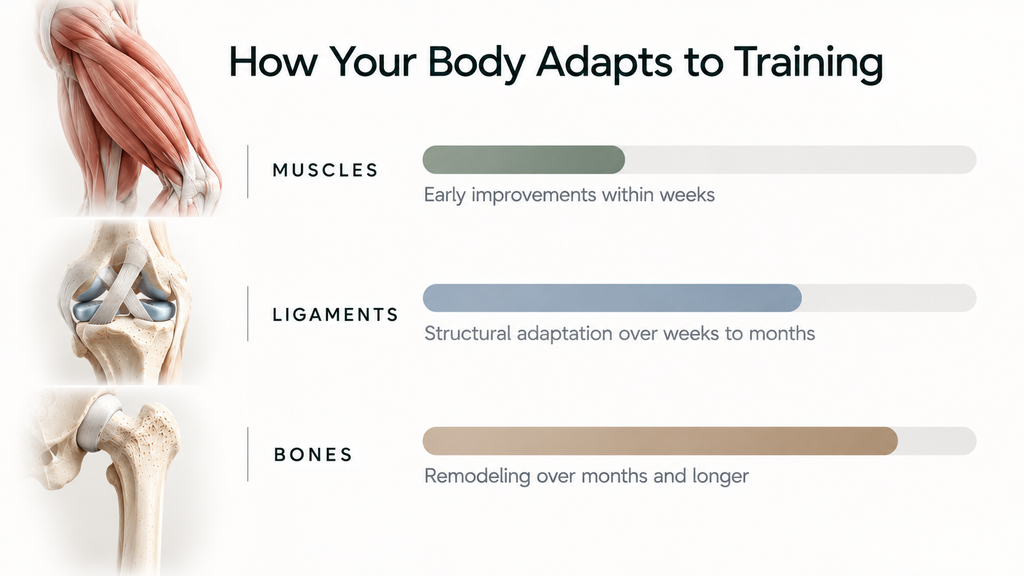
The takeaway: Start where you are, but choose a realistic timeline that allows your body to adapt.
Lesson 2: Invest in Programming, Not Just Recovery
Don’t fall for the “shiny object syndrome.”
Most people obsess over the ice baths, hyperbaric chambers, foam rollers, or the latest supplement recovery stack.
They are majoring in the minors.
Those things come after having a very well designed program set up.
One of my best decisions was hiring an evidence-based running coach, Jeremy Collier.
He structured my mileage, pacing, intensity, and recovery around three weekly runs: an easier run, a moderate run, and a long run.
Instead of guessing, I had a plan.
Training provides the stimulus. Recovery allows adaptation.
My Actual 10-Week Training Progression
Don’t Neglect Hills or Strength Training
The Twin Cities Marathon isn’t flat. Summit Avenue reminded me of that.
Late in the race, I saw runners walking, cramping, and struggling. It looked like a war zone. 50% of people were crying, cramping, or crippled trying to complete this hill.
I’m grateful I maintained leg resistance training. Strength training can support running performance, while outdoor hill training prepares you for course-specific demands.
Personally, I did one lower body strength training session per week.
The takeaway: Invest in a structured program, progress gradually, and train for the course you’re actually running.
Lesson 3: Master the Discipline of Running Slowly
If you really want to succeed with a marathon, you need to learn this lesson and learn it sooner rather than later. DISCIPLINED RUNS.
Yes, that means running at a very slow pace while grandmas pass you on the trail.
And resisting the urge to speed up.
On August 14, I averaged 12:06 per mile. On September 8, I averaged 11:38.
Five days later, I ran 19.19 miles at a 9:23 average pace.
Those easy runs helped me build aerobic fitness without accumulating unnecessary fatigue.
The goal of every workout isn’t PR.
[PHOTO 2: Screenshot of an easy run showing an 11–12-minute pace.]
The takeaway: Let easy runs be easy. Save your harder efforts for workouts designed to be hard.
Lesson 4: Fueling Is a Skill You Have to Master
Nutrition was the most difficult skill for me to master during marathon training.
It took approximately six weeks of experimenting with Sour Strips, GU, Sour Patch Kids, and other carbohydrate sources before I found something my stomach tolerated well.
Eventually, I switched to HNY+, a honey-based fuel that was easier to swallow and digest.
This was a HUGE win for me.
But the schedule mattered just as much as the product.
My Fueling Strategy: 20 Grams Every 20 Minutes
I consumed approximately 20 grams of carbohydrates every 20 minutes, totaling 60 grams per hour.
Breaking the run into 20-minute intervals also helped psychologically.
Run. Fuel. Repeat.
Before the race, I overheard a runner mention he’d brought one pack of gummy bears in case he needed them.
Meanwhile, I was thinking, Dude, I’ve got 12 packets and an entire fueling schedule.
I wasn’t leaving my nutrition to chance.
Carbohydrate needs vary with duration, intensity, and gastrointestinal tolerance, so practice your strategy during training.
Research: PMID 24791914.

Lesson 5: Understand Sodium, Hydration, and Muscle Cramps
One common misconception is that muscle cramps automatically mean you’re deficient in electrolytes.
The research tells a more complicated story.
During my marathon, I consumed approximately 110 mg of sodium every 20 minutes as part of my fueling strategy.
Despite that, I still started cramping around mile 24.
Research suggests exercise-associated cramps are multifactorial. Muscular fatigue and altered neuromuscular control may play important roles, and studies haven’t consistently found lower blood sodium or greater dehydration among runners who cramp.
Research: PMID 32796418, PMID 15273192.
Hydration and sodium matter, particularly during prolonged exercise, but more isn’t always better. Excessive fluid intake without enough sodium can cause dangerous hyponatremia. Hyponatremia can be fatal, so this is nothing to guess on, and important to work with a good coach.
The takeaway: Practice a hydration strategy suited to your needs, and don’t assume every cramp can be fixed with more electrolytes.
Lesson 6: Find Gear That Makes the Miles More Comfortable
Expensive gear doesn’t replace good training, but a few items made running significantly more comfortable.
My Running Essentials
- Belt: Endorphin Running Belt for fuel, phone, and essentials.
- Hydration: Endorphin Soft Flasks.
- Fuel: HNY+. and HNY+ Caffeine at 50mg every other HNY+ from mile 14-26
- Preworkout: Gorilla High Stim 30-60 min before long runs
- Creatine: 5-10g/daily
- Socks: Swiftwick eliminated the blisters I experienced with cotton socks.
- Anti-chafing: Squirrel’s Nut Butter.
- Clothing: Everyday Better Club shirt and inexpensive Amazon shorts.
- Shoes: ASICS carbon-plated running shoes, generously gifted to me by my friend Brent Silky.
Before Brent’s gift, I ran in approximately $70 shoes. The ASICS provided cushioning and comfort that made longer runs much more enjoyable.
The takeaway: You don’t need the most expensive gear. Find what works, and test it before race day.
Lesson 7: Respect the Weather—and Prepare Your Legs
Some of my training happened in temperatures around 90°F.
Heat increases cardiovascular strain, so the same pace can feel significantly harder. Slowing down in hot weather doesn’t necessarily mean you’re less fit.
Something else surprised me:
My lungs weren’t always the limiting factor. My legs were.
I could feel comfortable breathing while my legs became incredibly heavy.
But as training progressed, I could run farther before experiencing that fatigue.
The wall kept moving.
That’s why muscular endurance, gradual progression, and training for your course’s terrain matter.
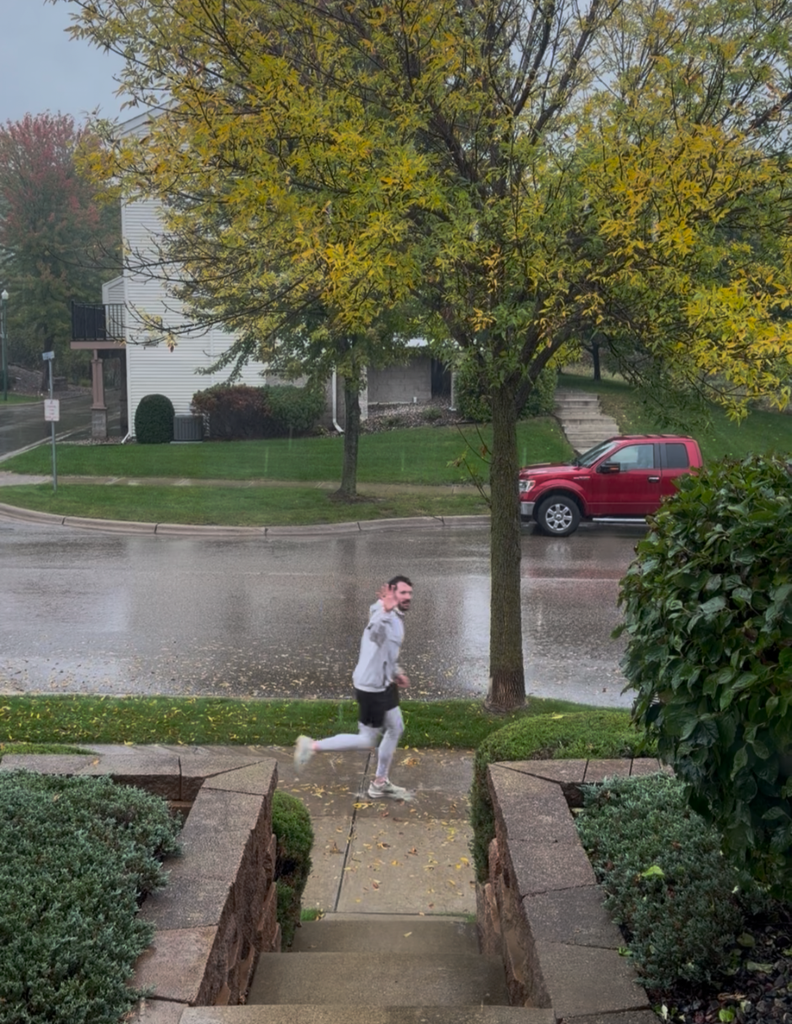
The takeaway: Adjust your pace to the conditions and prepare your legs for the demands of the race.
Lesson 8: Taper—and Avoid Last-Minute Recovery Mistakes
As race day approached, my coach reduced my training volume.
After weeks of doing more, doing less felt strange.
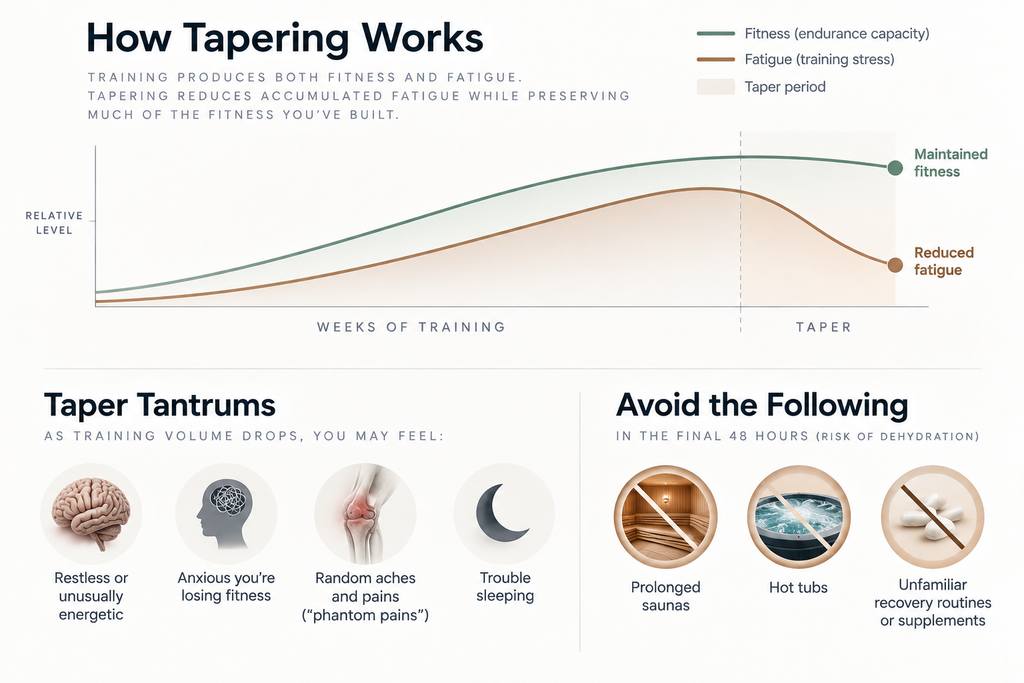
But training produces both fitness and fatigue.
Tapering reduces accumulated fatigue while preserving much of the fitness you’ve built.
Research supports appropriately designed tapering strategies for endurance performance.
Research: PMID 17762369.
Watch Out for Taper Tantrums
There’s also something runners call “taper tantrums.”
As your training volume drops, you may feel restless, unusually energetic, or anxious that you’re losing fitness. You might even notice random aches and pains—sometimes called phantom pains—that suddenly seem more noticeable before race day.
Not every ache signals an injury, but don’t automatically dismiss new or worsening pain either.
Trust your training. Don’t let pre-race nerves convince you to squeeze in another hard workout.
AVOID THE FOLLOWING:
I’d also avoid prolonged saunas, hot tubs, or unfamiliar recovery routines in the final 48 hours if they risk unnecessary dehydration.
The takeaway: Don’t squeeze in last-minute hard workouts. Arrive recovered and ready to use the fitness you’ve built.
Lesson 9: Make Race Week Boring—and Plan Your Morning
For approximately two weeks before the race, I kept my wake-up time consistent.
I also ate familiar breakfasts and lunches throughout race week.
No unfamiliar foods. No dramatic changes.
Two nights before the marathon, I went to Olive Garden.
The night before, I ate eight slices of French toast with maple syrup and chocolate milk.
Carbohydrate loading helps maximize muscle glycogen stores, but it’s about adequate carbohydrate intake over the preceding days—not one enormous meal. Hydration and sodium should also be individualized by your coach.
Keep Caffeine Familiar
Before the marathon, I took my usual Gorilla High Stim Blueberry pre-workout and 5 grams of creatine—a routine I’d practiced during long runs. It also helped me have a bowel movement before running.
Caffeine can improve endurance performance, but tolerance and dosage vary. High-stimulant products may contain additional ingredients, so don’t copy someone else’s routine without understanding the risks.
Creatine supports certain training adaptations but isn’t an established acute marathon-performance booster.
The takeaway: Keep race week predictable, know your starting corral, arrive early, and avoid experimenting with unfamiliar supplements or foods.
Lesson 10: Start Slower Than Your Adrenaline Wants You To
The Twin Cities Marathon atmosphere was electric.
Thousands of runners. Spectators cheering. Music everywhere.
But that excitement can make you start too fast.
To manage my adrenaline, I played the same calming meditation music I typically listen to in the sauna.
Mile 20 doesn’t care how impressive mile one looked.
Account for Crowds, Weaving, and GPS Differences
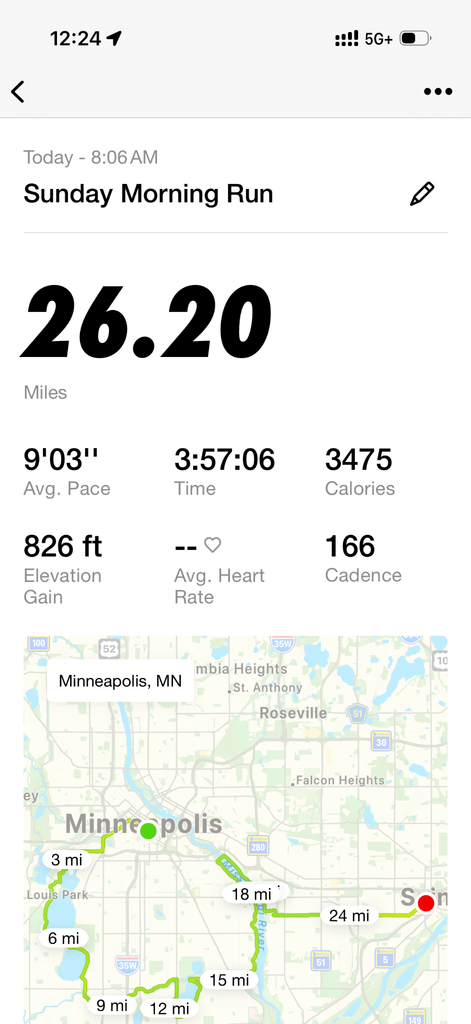
My official chip time was 4:01:29, but my watch recorded 26.2 miles in 3:57.
Crowded races involve weaving, getting boxed in, and taking wider turns. GPS watches can also overestimate distance.
To officially break four hours, you need approximately 9:09 per mile over the certified marathon course.
But if your watch records 26.5 miles, you’d need a watch pace closer to 9:03 per mile to finish under four hours.
Use official mile markers and elapsed time—not just GPS pace.
The takeaway: Control your adrenaline, avoid unnecessary weaving, and save your strongest effort for the final miles.
Conclusion: You Are Capable of More Than You Think
On July 25, my long run was 6.19 miles.
On October 4, I completed 26.2.
Same body. Different capacity.
But I couldn’t have done it alone.
My wife supported me through the early mornings, long runs, and challenges of balancing training with a newborn and a new business.
When I run another marathon, I’ll give myself more time to prepare and hopefully train with friends.
I’m not suggesting everyone should train for a marathon in 10 weeks.
I’m suggesting everyone should have something meaningful they’re working toward.
Maybe it’s a marathon, getting stronger, or improving your metabolic health.
Whatever it is, start where you are.
Get the dose right. Be consistent. Recover. Adapt.
Then see what your body is capable of.
What’s Your Next Challenge?
Whether it’s your first 5K, a marathon, HYROX, or improving your metabolic biomarkers, it’s not always about putting in more effort. It’s about directing that effort into the right system.
At Evexia Clinic, we help channel that energy into a personalized plan with evidence-based nutrition, exercise guidance, and connections to trusted coaches and resources when needed.
Let Evexia Help You Get Started
- Dr. Roetman
Evexia Clinic
Scientific References
- PMID 32796418 — Muscle cramping in marathon runners.
- PMID 15273192 — Electrolytes, hydration, and exercise-associated cramping.
- PMID 24791914 — Carbohydrate intake during endurance exercise.
- PMID 17762369 — Tapering and athletic performance.


